The 2016 vintage Brut, which has recently been released, has been awarded a silver medal in THE National competition. There are now around 800 vineyards in Great Britain and we hadn’t dared enter before, but following the success of the 2015 Brut in the regional competition last year, we thought it worth a try! We are delighted with this result, particularly since the wine had just been disgorged, so will continue to improve.

You are warmly welcome to come and taste the new wines – Hendred Spring, the new white wine and the latest vintage of Hendred Brut, along with the other Hendred wines. Take a stroll amongst the vines yourself if you like, or email us (info@hendredvineyard.co.uk) to book a limited number of brief guided walk-arounds on opening afternoons. No charge for tastings/tours on opening days and no obligation to buy.

Open Saturdays 2-5pm 19th June, 17th July, 21st August

The shop has been adapted, now with more space and a door for entry, another for exit. Strict COVID precautions will be observed. Created during lockdown is an additional larger tasting room which we can open if anyone is being extra cautious and would like to taste in a separate space and have a single use biodegradable glass. There is now washroom for wheelchair users.

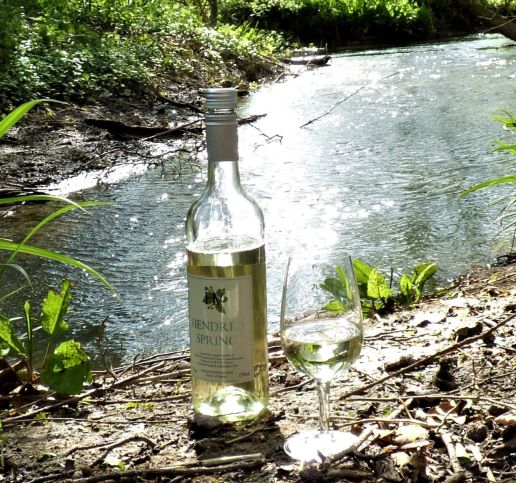
As a salute to the abundant water supplying the land around the vines, ‘Hendred Spring’ still white wine has made its debut. A new twist including some guest ‘Phoenix’ grapes and subtly different from it’s predecessor ‘Hendred Mist’ (which sold out earlier this year), gives floral notes and a distinct essence of lime on the palate. In line with spring fever, the latest Hendred Brut (2016) is also released, as the last few cases of the 2015 vintage leave the shelves. Thank you for shopping locally and keeping the little businesses going.

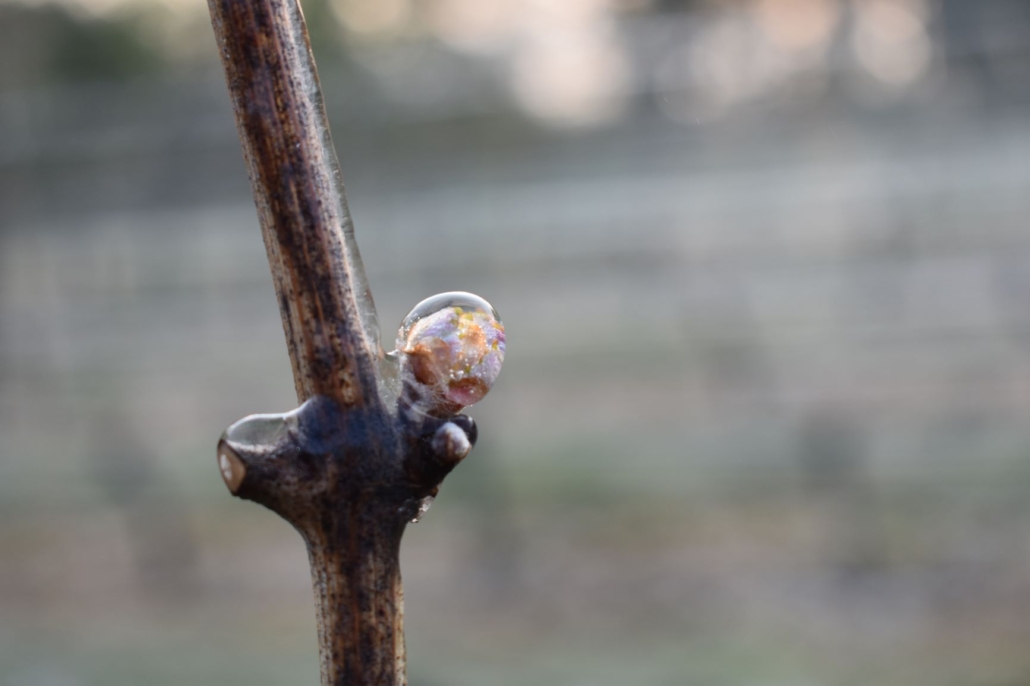
A bud in an ice capsule.  A practically absurd but theoretically elegant way to protect them from frost damage.  Hoping that the many hours of head-scratching about how to get water in volume up-hill and distributed over all the thousands of vines over a long period is worth it.  After a compressed journey of inspiration, trial and error, infinite adjustment and thrice nightly eerie trips around the vineyard by moonlight, here we are.   Another week or so and the frost danger period will have passed, then we’ll see if the dynamics work in practice, or the buds go crispy and fall off. 

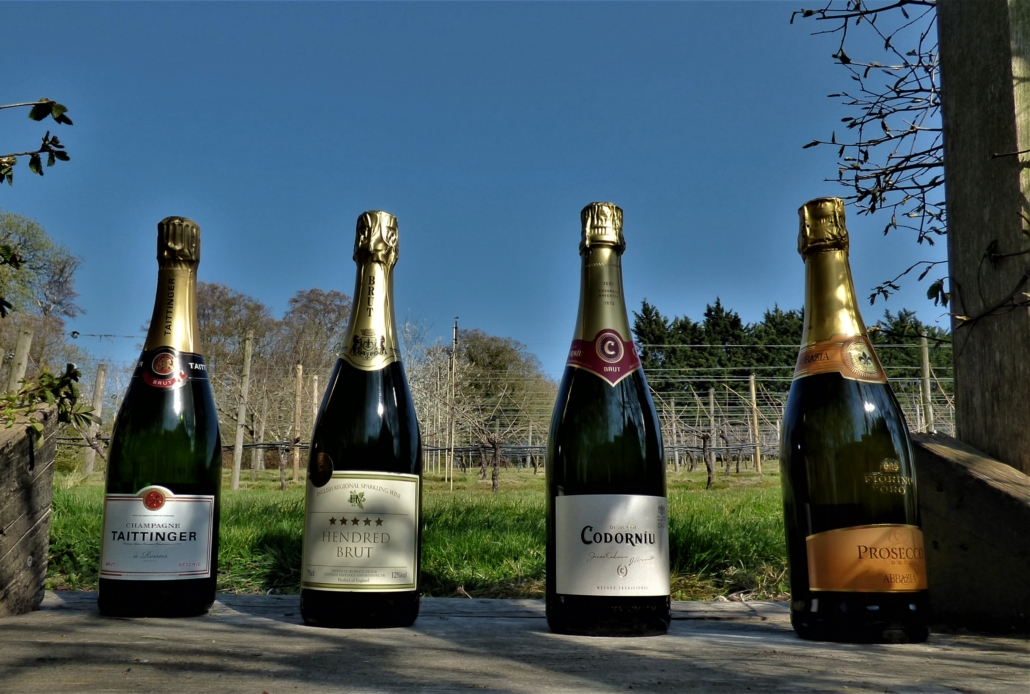
The main difference between sparkling wines is the region they come from. For example, Champagne is from the Champagne region of France, Prosecco from Italy, Cava from Spain and English sparkling wine or Californian sparkling wine speak for themselves. All sparkling wine is made in two stages of fermentation, the first to ferment the sugars into alcohol and the second to create the fizz. Prosecco is made by a different method, making it the odd one out of the group, in that the second fermentation step takes place in a large tank prior to bottling resulting in a sweeter and less bubbly wine. The other sparkling wines are made using a long second fermentation step in the bottle. This is known as the ‘traditional’ method.  The wine is sealed in a bottle with a simple cap, additional yeast is added and it is then left to ferment for over a year creating a pressure within the bottle of around 5-6 atmospheres, nearly 2 times higher than Prosecco. The bottles are placed on a riddling rack and turned regularly so the sediment settles in the neck of the bottle. The necks are then frozen and the ‘lees’ (sediment) is pops out when the cap is opened and then a ‘dosage’ (sugar mixture) is added, the bottles corked and then laid down for months or years. The extra fermentation produces persistent bubbles and complex flavours. A variety of grapes are used in sparkling wines: Champagne is usually Pinot noir, Pinot Meunier and Chardonnay, Cava can be Macabeu, Parella, Xarello grapes, Prosecco can be Glera, Perera, Bianchetta, Verdico, Pinot Gris and English sparkling wine could include Pinot noir, Seyval blanc, Pinot Meunier, Chardonnay, but many other varieties can be used.

It’s vine-bud-developing / frost-watching time.  This is the season of torment when we become obsessed with our ever increasing weather indicating gadgets – checking highs, lows, wet temperature, dry temperature, humidity, dew point and so on.  Once the buds develop beyond the ‘woolly bud’ stage and particularly when things are looking lush and green, if a frost strikes it can be devastating and the crop can be obliterated entirely.  Usually the frost will only take a proportion of buds and secondary buds can make up some of the loss, however if there is a frost after the secondary buds develop, then it’s all over.  The sinking heart feeling of watching a lush green haze on a vineyard turn brown is a reality many grape growers face.   Vines are tending to develop earlier in the season to compound the issue and frosts are striking more frequently and with more extreme low temperatures in recent years.  To add to the excitement and unpredictability, East Hendred seems to have a microclimate beyond the realms of any weather forecast in the area.  

Mitigating such forces of nature requires innovative thinking.  Growers have experimented with many tactics; the main ones are:  Bougies (paraffin candles) which can be laid out over the vineyard raising the temperature a little, but these are expensive and labour intensive; they do create a rather magical scene at least.  Alternatively, large propane burners can be used to pump hot air underneath vines. Or wind turbines used to draw the warmer upper layers of air downwards, so the cooler air near the ground is moved upwards.   Helicopters are sometimes employed by vineyards to do this too – they love this in Napa Valley.

There is another method which craftily uses the energy dynamics of water transitioning to ice to protect the buds.  So long as a constant stream of water remains coating the buds and freezing, the buds remain protected and do not freeze inside this ice cocoon.  In years gone by, the MacKinnon family and Biagio who used to look after the vines here, sprinkled the vines with water from a tractor spray, but as frosts are getting more severe and frequent, it is just not sufficient (and tractor noise not ideal in the middle of the night.)  But the concept is too appealing and our natural resources too ideal not to harness the power of it.   Given Hendred vineyard has a pond into which water drains naturally from the land all year round, and several springs also, automating a sprinkler system with pumps which are mostly powered by existing solar generated electricity is being tested this year.  With novel sprinkler heads which use a pulse action to make sprinkling ultra-efficient, it is the newest and greenest method available to us.   So the system has been installed, with much head-scratching and adaptation of components along the way. The sprinkler heads spurted rhythmically on a sunny afternoon for a few hours anyway; whether it endures several hours on a frosty night remains to be seen.  I have poured the Holy Water kindly given out at the Easter service at St Mary’s into the pond as a fall back.

So the next time you see Helen Willets or Tomas Schafernaker on the BBC gesticulating over blue and white bits on the weather map and you see ominous minus symbols, spare a thought for us as we will be attaching head torches to our woolly hats, flicking sprinkler nozzels and getting ready to be soaked changing pump filters in the dark.

On 10th and 11th July, local vineyards and local food producers are assembling for a feast of wonderful goods at Brightwell Vineyard in Wallingford. So if you would like to sample some great local produce and relax with live music in a wonderful location do come along. Tickets are also on sale from 2nd April via Ticket Tailor.

There will be an array of white, rosé, red and sparkling wines, also some spirits, to choose from. Talk to the winemakers to get first hand knowledge of how their products are made and how best to enjoy them. Wines by the glass and bottles of wine will be available for sale from the vineyard stands. 

Patricia Stefanowicz, a Master of Wine specialising in English wines and the Thames & Chiltern Vineyards Association Vice-Chairman, and Yannick Joseph, Head Butler and Cellar Master of St. Johns College, Oxford, will conduct tutored wine tastings of 3 wines from the region at 12 noon, 2pm and 3.30pm on both festival days. Tickets cost £5 per person and will be available on the day from the Festival entrance. Click here to find out more: English wine and food festival at Brightwell Vineyard

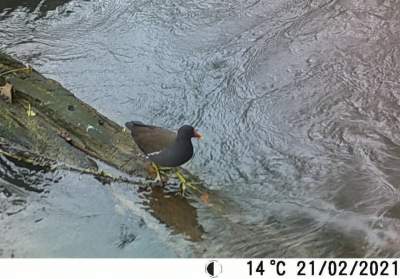
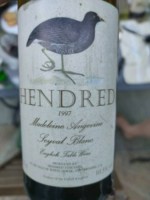
This water hen (or moorhen) was spotted this week in the brook at the bottom of the vineyard.  By all accounts they have been here for a very long time and may even have a connection to the name Hendred.  In Saxon times the brook was known as “The Rill of the waterhens” (rill means small stream) which may have been shortened to Hendrill and then Hendred.  There are also two possible Celtic derivations Hen-Rhydd, meaning “Old Ford” or Hendref, meaning “winter dwelling”.

Pictured is the 1997 vintage of Hendred white wine made from Madeleine Angevine and Seyval Blanc grapes featuring a waterhen.

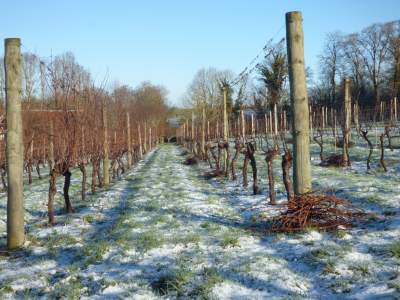
The yearly pruning is done – each vine unique, so thought goes into every one, to set the vine up for its best yield. Those before pruning on the left and after on the right, with a little pile of prunings, some to be used to create new vines.