
10 years on
January 3rd ten years ago was a freezing day. It was the day we moved to the vineyard, with our two young children to embark on what we thought would be an exciting adventure. In those first few days when the heating didn’t work and the electrics kept tripping (not ideal for the reptile tanks), the gradual discovery of various (some quite serious) maintenance issues unfolded.

Countless projects later, the vineyard has expanded to keep up with local demands for wine. In the early days we relied on contractors to advise, maintain vines and harvest and we have progressed to managing it ourselves with help from a super small team.
With a combination of a farming family plus business strategy and innovation at the heart of our occupations since leaving university and a love of nature and being outside, surely running a vineyard would be a piece of cake. Not quite so. It turns out that the learning curve of how to grow grapes and produce good wine is as convoluted as it is a fine art. Experience sure gives theory a run for it’s money. We have worked hard on optimizing everything we can, including soil conditions and mitigating effects from the extremes of the British weather. Every year we try new things and do everything in the most sustainable way we can. And each year throws up new challenges. The weather at key times such as flowering, bud break and ripening can impact the grape yield massively.
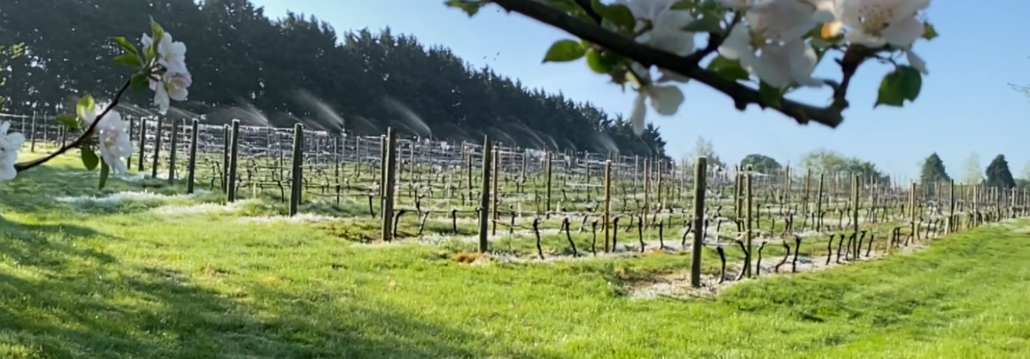
To protect against frost we once tried covering vines in frost fleece, held in place using hundreds of clothes pegs (child labour employed), have made mini fires at -4 °C, sprayed the buds with polymers and eventually became early adopters of a novel sprinkler frost protection system. This has worked wonders and is perfect for this site, drawing water from springs and a natural pond and powered by solar energy. The engineering for this involved a good deal of head scratching, re-engineering and more head-scratching, not to mention some eyewatering water pump launches into the pond and several hours of adjusting sprinklers in rain-coats. In the end, the heart-ache of watching spritely green shoots go brown and droop after a night of frost will remain, we hope, a distant memory.
The interest and help of the community in East Hendred and beyond has been truly the most inspirational part of this journey. In particular the Sicilian Biagio who helped plant the original vines and very French Philippe, who diligently cares for the vines.

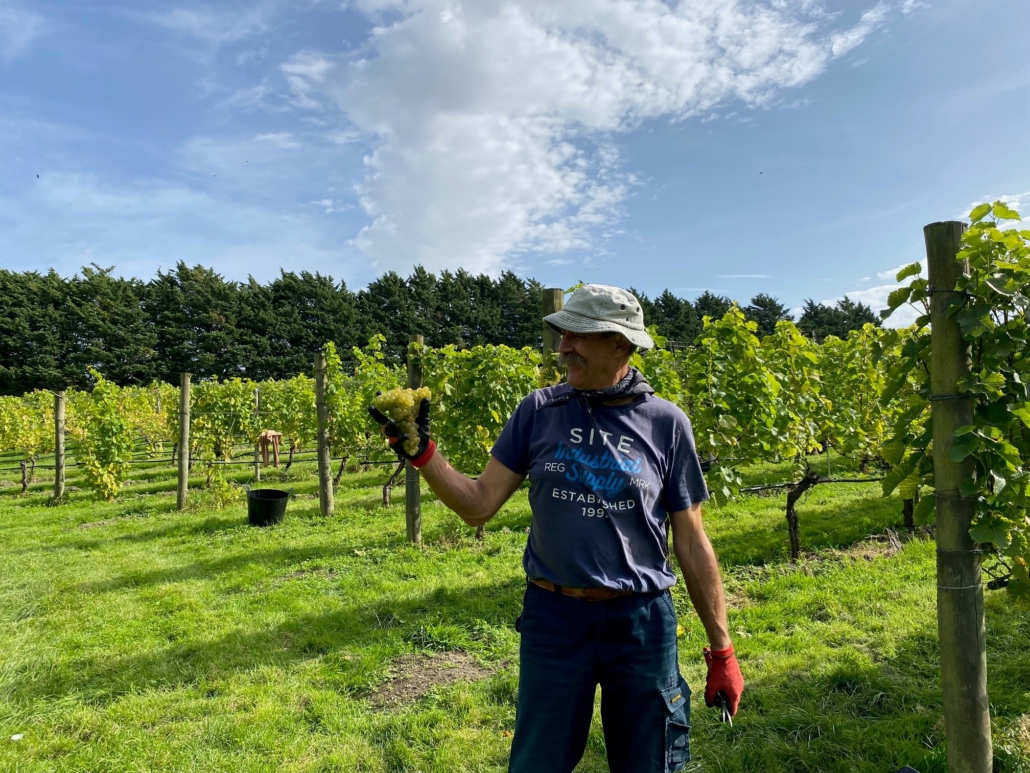
The highlights of the vineyard year include the harvest days. We only pick in good weather and are always surprised at how inaccurate our harvest estimates are, so it is always a nervy but excitable day. Will there be too many harvesters or not nearly enough? Each harvest time, they re-ignite our passion for the vineyard with their enthusiasm. Will there be one four hour trip to the wine maker today or, too much for the truck and two? When we started with the vineyard, contractors helped us a lot but now we do pretty much everything with people we know.
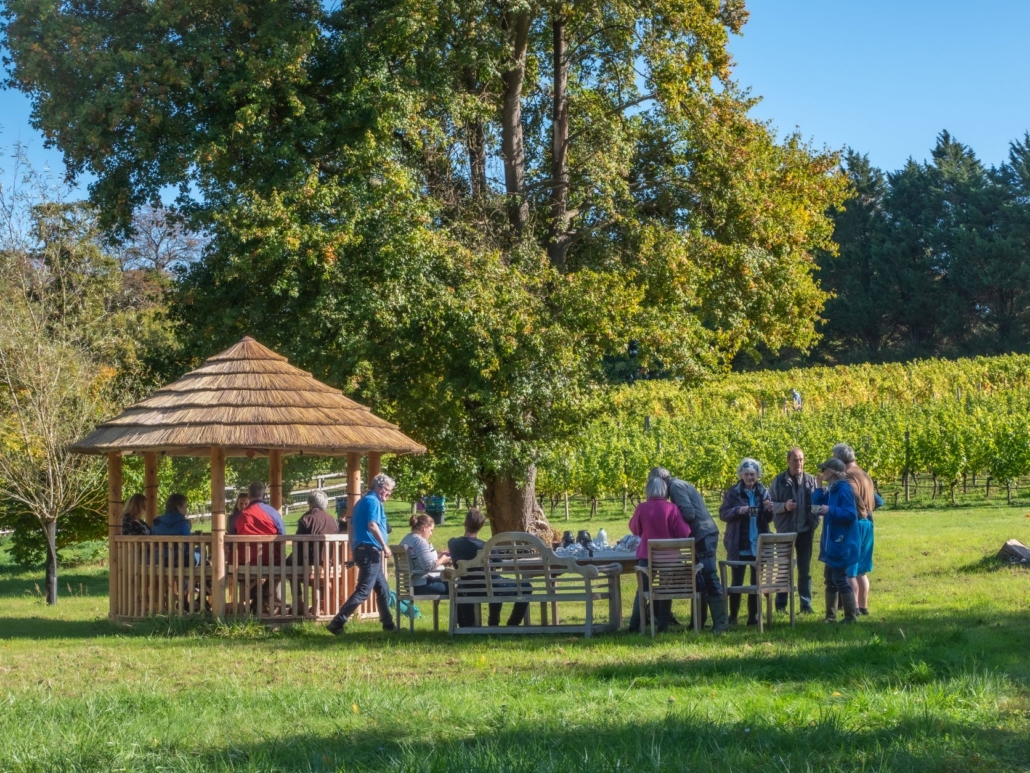
Another highlight is tasting of the new wines with the winemaker and getting together at the regional competition to taste wines with owners of other local vineyards. The complexities of wines and how they can be so different year to year is intriguing. This is also an opportunity for local grape growers and wine-makers to exchange ideas, experiences and there is great camaraderie with being part of a growing industry. The icing on the cake has been winning awards for the wine. Hendred Brut won the regional ‘best sparkling wine’ in 2016; we also won ‘best rose’ twice (2019 and 2023) A combination of the site with great soil and microclimate (and remarkably little issue with disease or pests), varieties of grapes fine-tuned over the years to thrive and crucially and a superb wine-maker.

It’s not surprising then that with the warming climate and advances in viticulture including optimising grape growing techniques and disease resistant varieties and developments in winemaking have ignited the explosion of vineyards in the UK. Hendred vineyard is actually one of the oldest vineyards in England, established in 1972 by the McKinnon family. It’s place at the beginning of the S shaped curve of vineyard numbers (which hasn’t yet tailed off) is always an mouth-opener to any new visitors to the vineyard. In the last five years the area under vine in the UK has doubled and there are now well over 943 vineyards and 209 wineries (2022 WineGB data). The popularity of English wines, particularly sparklings has soared, boosted after an international panel tasting in 2004 which awarded most of the top ten positions to the English wines: sour grapes for the traditional wine producers of other countries. With the local food movement driven by the desire of consumers to cut food miles, local vineyards like ourselves, are trying their best to keep up with demand. We have grown the size of the vineyard with more planting and two new grape varieties.
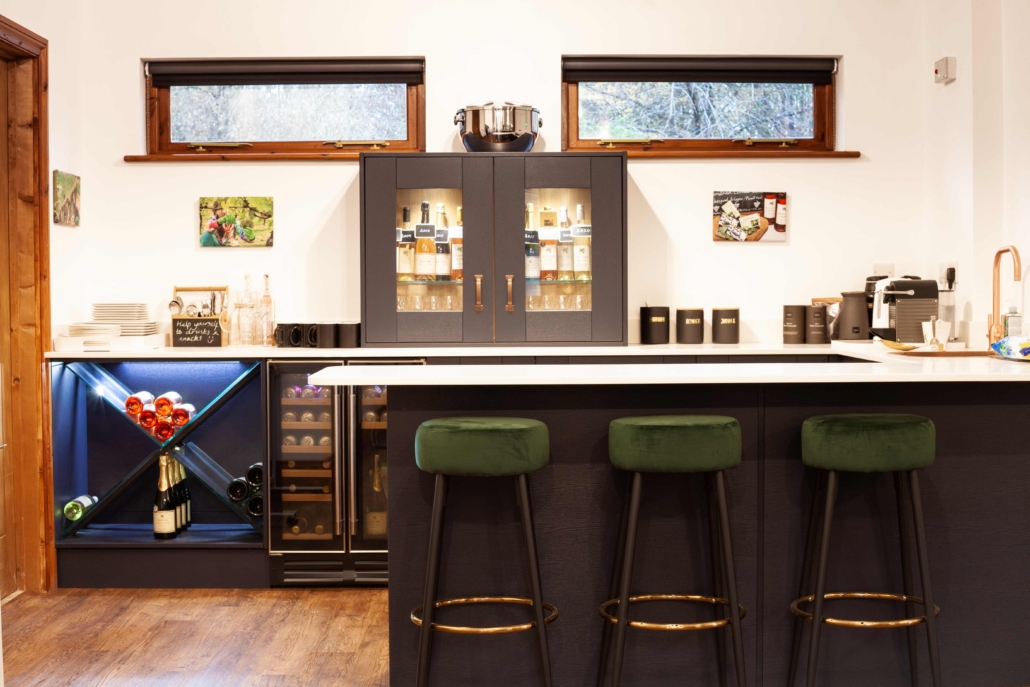
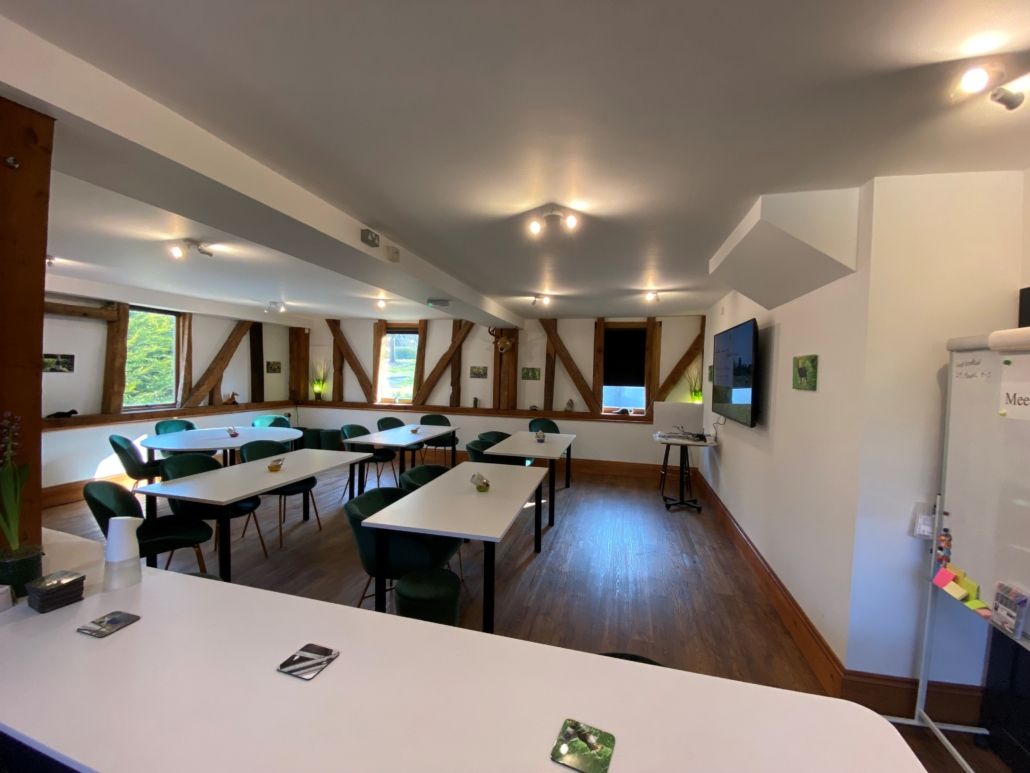
Keeping up with day-to-day tasks of running the vineyard is, as anyone who runs a small business knows, is all consuming. Alongside this, since we began 10 years ago, we created a tasting room, a shop and developed outbuildings, have given presentations, tastings and have open days in the summer and also set up this web page, so we feel quite connected with our customers. We listened when they asked for a sparkling rosé and produced the first this year. We have developed a really good relationship with our wine-maker and are excited about the new wines being made, particularly from the 2023 harvest as the grapes were we think the loveliest (as well as the most abundant) yet. Selling through our online shop and cellar door and a few local farm shops and a deli we want to keep things as local as possible.
One of the unexpected pleasures of the vineyard has been becoming so in touch with nature. Catching sight of the variety of wildlife here which has become a real passion. The drama of a hailstorm when the vines are flowering and all could be lost, certainly helps you connect with nature too.
Of course there is the paperwork, the eye watering HMRC monthly returns, the regulatory and licencing requirements and the technical equipment and building and land maintenance (e.g. falling trees every time there is a storm) etc. etc. to contend with, but all in all the last ten years has been the adventure of a life time. Who knows what the next ten years holds but we hope the vineyard will continue to grow and we still have the appetite for trying more new things.

